
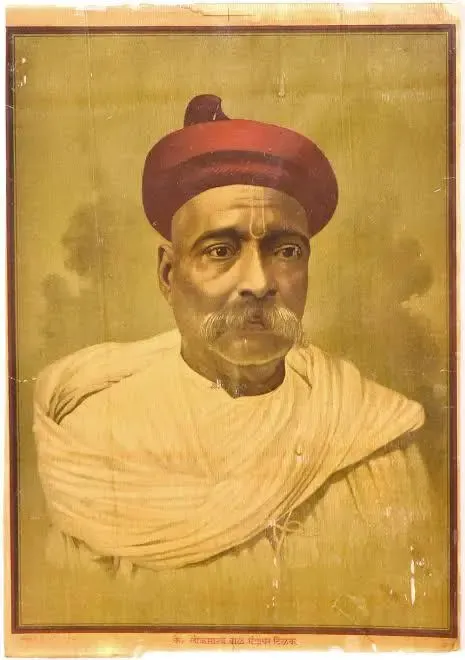
Bal Gangadhar Tilak (1856–1920), remembered as Lokmanya, was one of the earliest leaders to inspire a mass political consciousness in India under colonial rule. His contribution lay not only in his fiery writings and speeches but also in his ability to link cultural traditions with nationalist aspirations.
Two cries came to symbolize Tilak’s leadership. The first was “Ganapati Bappa Morya”, the devotional chant of Lord Ganesha. Traditionally confined to household worship, Tilak transformed Ganesh Chaturthi into a public festival in the 1890s. By organizing community celebrations, processions and gatherings, he created a space where ordinary people — regardless of caste or class — could assemble. Within these festivals, patriotic plays, songs, and speeches circulated freely, turning devotion into a vehicle of political mobilization.
The second was his famous political slogan: “Swaraj is my birthright, and I shall have it.” This declaration, made in the early years of the 20th century, resonated across the country as a call for complete self-rule. For the first time, independence was framed not as a distant dream but as a legitimate right of every Indian.
By linking these two cries — one rooted in religious devotion, the other in political determination — Tilak built a bridge between faith and freedom. His strategy reached beyond educated elites to touch the masses, uniting them in a common spirit of resistance against British authority.
For this reason, the colonial rulers called him the “Father of Indian Unrest,” but to his countrymen, he became the voice that first declared India’s freedom to be both a sacred duty and a natural right.